How to Recover Smarter After a Big Race: Tips for Runners and Triathletes
Crossing the finish line of a marathon, half marathon, or triathlon is an incredible achievement. But your post-race recovery is just as important as your training. Recovering smarter ensures you repair muscles, prevent injury, and come back stronger for your next event. This guide will show you how to recover faster, reduce fatigue, and maximize performance after a big race.
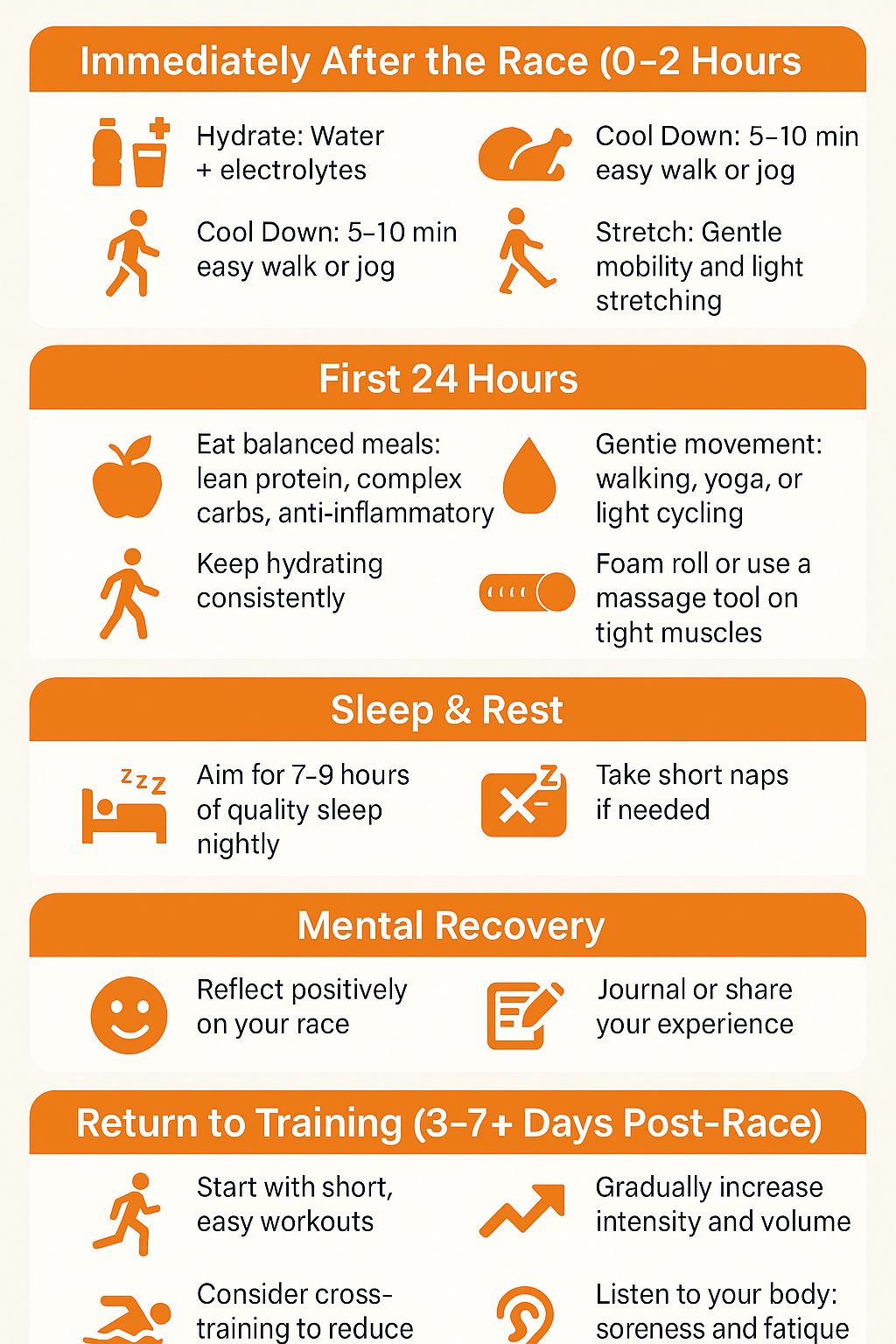
1. Prioritize Immediate Post-Race Recovery
The first few hours after a race are crucial for recovery:
Hydrate: Replace fluids and electrolytes lost through sweat. Sports drinks or electrolyte tablets can help.
Refuel: Aim for a mix of carbohydrates and protein within 30–60 minutes. A 3:1 carb-to-protein ratio is ideal for glycogen replenishment and muscle repair.
Cool Down: Light walking or gentle stretching helps prevent stiffness and aids circulation.
2. Nutrition for Optimal Recovery
Nutrition continues to play a major role in the days after a race. Focus on:
Protein: Lean meats, eggs, Greek yogurt, or plant-based proteins to support muscle repair.
Carbohydrates: Whole grains, fruits, and starchy vegetables to restore glycogen.
Anti-inflammatory foods: Berries, leafy greens, salmon, and nuts can help reduce inflammation.
Hydration: Keep drinking water and electrolyte-rich beverages for 24–48 hours post-race.
Tip: Avoid heavy alcohol or high-sugar foods immediately after a race—they can impair recovery and hydration.
3. Active Recovery and Gentle Movement
While it’s tempting to rest completely, gentle movement can accelerate healing:
Short walks or light cycling the day after a race improves circulation.
Yoga or mobility sessions reduce stiffness and improve flexibility.
Foam rolling and massage can help release tight muscles and alleviate soreness.
Avoid training intensely too soon—your body needs time to fully recover.
5. Mindset and Mental Recovery
Recovery isn’t just physical—mental fatigue is real after a big race:
Reflect on your performance positively: celebrate achievements rather than dwell on mistakes.
Take a few days off from structured training to recharge mentally.
Consider journaling or sharing your race experience to process emotions and stay motivated.
6. Structured Return to Training
Once the first 3–5 days have passed, return to training gradually:
Start with easy, short workouts—avoid speed or long-distance efforts immediately.
Listen to your body—soreness and fatigue are normal, but should decrease each day.
Slowly rebuild intensity and volume over 1–3 weeks, depending on the race distance.
Tip: Consider cross-training like swimming or cycling to maintain fitness while minimizing impact on joints.
7. Tools to Aid Recovery
Several tools and techniques can help you recover smarter:
Compression gear to reduce swelling and improve circulation.
Cold water immersion or contrast baths to reduce inflammation.
Massage guns or foam rollers for muscle relief.
Recovering smarter after a big race is about combining nutrition, rest, gentle activity, and mindset. By prioritizing recovery, you’ll reduce fatigue, prevent injuries, and return to training stronger than ever. Remember, your next PR isn’t just built during training—it’s also built during recovery.
Quick Recap:
Hydrate and refuel immediately post-race.
Eat protein, carbs, and anti-inflammatory foods.
Engage in gentle active recovery.
Prioritize sleep and rest.
Focus on mental recovery and reflection.
Gradually return to structured training.
Use recovery tools and techniques to aid muscle repair.
By following these strategies, your body—and mind—will thank you, helping you perform your best in your next race.
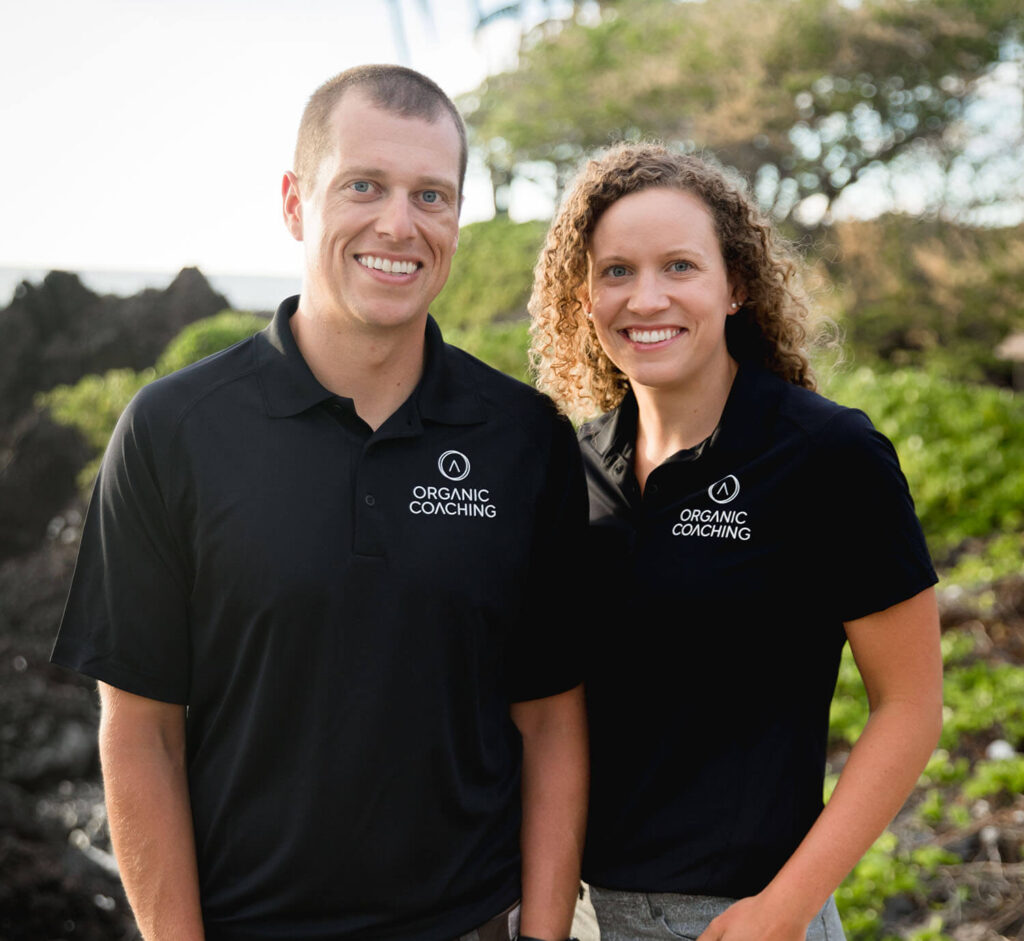
Carly and Tyler Guggemos built Organic Coaching in 2014 with a simple philosophy that works. The idea is to take what you have and grow it to get faster, fitter and stronger. And to do it with the time you have – not the time you wish you had.