

If you’ve ever finished a race thinking, “I felt great early…what happened?”…you’re not alone.
In long-course triathlon, the most common reason athletes underperform isn’t a lack of fitness.
It’s pacing. Whether you’re racing a 70.3 (Half Ironman) or a full Ironman, the difference between a strong finish and a late-race collapse usually comes down to one thing:
How you pace the first half of the race.
This guide breaks down exactly how to pace a 70.3 or Ironman without blowing up, so your run reflects your fitness, not your mistakes.
Why Athletes Go Out Too Hard
Almost every pacing mistake starts the same way…You feel good. Race morning adrenaline, fresh legs, and race-day energy create a dangerous illusion; effort feels easier than it actually is.
This leads athletes to:
- Swim slightly too hard
- Push above target power early on the bike
- Start the run faster than planned
The problem? That early effort has a delayed cost.
Going out too hard leads to:
- Early glycogen depletion
- Elevated heart rate and core temperature
- Increased muscular fatigue
- Reduced ability to absorb nutrition
You might not feel it at mile 5. But you will feel it at mile 10…or mile 20.
In long-course racing, the goal isn’t to feel good early. It’s to still feel strong late.
Why Athletes Underperform on Race Day (Even When They’re Fit)
Effort vs Pace vs Heart Rate: What Should You Trust?
One of the biggest challenges in pacing a 70.3 or Ironman is deciding what metric to follow.
Should you trust:
- Pace?
- Heart rate?
- Power?
- Perceived effort?
The answer: All of them, but with a clear hierarchy.
1. Effort (Primary Driver)
Effort, how the race feels, should always guide decisions.
Conditions change:
- Heat
- Wind
- Terrain
- Fatigue
Effort adjusts with those variables. Numbers don’t.
2. Power / Pace (Secondary Anchor)
- On the bike: power is your most reliable pacing tool
- On the run: pace is helpful, but must be flexible
Use these as boundaries, not targets to chase at all costs.
3. Heart Rate (Context Tool)
Heart rate helps you:
- Monitor drift
- Identify overpacing early
- Adjust for fatigue or heat
But heart rate lags behind effort, so don’t rely on it alone.
The best pacing strategy combines all three, but prioritizes effort.
Why Consistency Beats Intensity in Endurance Training
The Negative Split Mindset
One of the most effective pacing strategies in endurance racing is simple:
Start controlled. Finish strong.
This is known as a negative split.
Instead of fading over time, you:
- Hold back early
- Maintain steady output mid-race
- Build effort in the final third
Why it works:
- Preserves glycogen stores
- Keeps heart rate under control
- Allows better fueling
- Maintains muscular integrity
In practice, this means:
- Your first half should feel almost too easy
- Your middle should feel controlled
- Your final third is where you race
Most athletes do the opposite:
- Go out fast
- Try to hang on
- Fade hard
The negative split requires discipline early, but rewards you late.
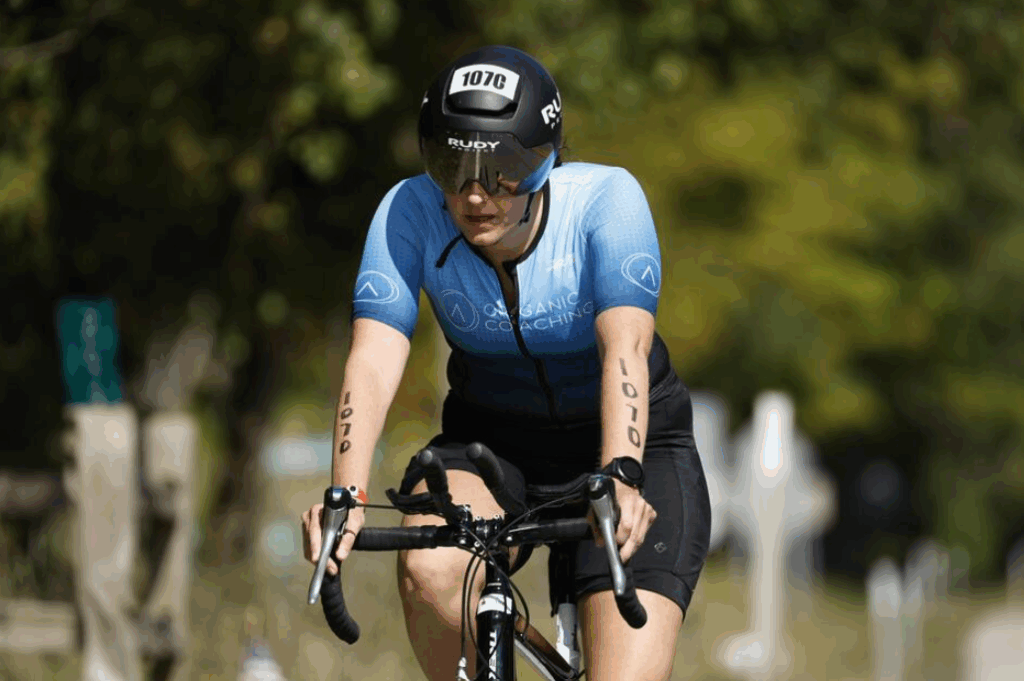
Bike Pacing: The Most Important Part of a 70.3
In a 70.3 triathlon, the bike determines your run.
If you overbike, even slightly, you compromise everything that comes after.
Common Bike Pacing Mistakes
- Riding above the target power early
- Surging on hills
- Ignoring aerodynamic position fatigue
- Chasing other athletes
Why It Matters
Overbiking leads to:
- Glycogen depletion
- Elevated lactate levels
- Increased core temperature
- Poor run mechanics
Which results in:
- Slow run splits
- Walking aid stations
- Cramping or shutdown
Smart Bike Pacing Strategy
- Ride steady, not aggressively
- Keep power consistent across terrain
- Avoid spikes (especially early)
- Stay within your planned range
For most athletes:
- The goal is to get off the bike feeling controlled, not crushed
How to Build Toward a Spring Marathon or Early 70.3
Simple Pacing Guidelines That Actually Work
If you want a practical way to pace your Ironman or 70.3, follow these guidelines:
1. Cap Your Early Effort
- First 20–30 minutes of the bike: stay conservative
- First 2–3 miles of the run: slower than goal pace
Let the race settle.
2. Avoid Spikes
- Smooth power output on the bike
- No surging to pass
- Controlled effort on hills
Consistency is more important than speed.
3. Fuel Early and Consistently
Pacing and fueling are connected.
If you pace too hard:
- You won’t absorb nutrition properly
- You’ll fall behind on fueling
Start fueling early, even if you don’t feel like it.
4. Monitor Drift
Watch for:
- Heart rate creeping higher
- Effort feeling harder at same pace
- Power becoming harder to hold
These are early warning signs. Adjust before it’s too late.
5. Save the Race for the Final Third
Ask yourself:
“Can I hold this effort for the next hour?”
If the answer is no, you’re going too hard.
The race doesn’t begin until:
- Mile 40+ on the bike (70.3)
- Mile 80+ on the bike (Ironman)
- The second half of the run
That’s where pacing shows.

Why Pacing Is Hard (Even When You Know This)
Most athletes understand pacing intellectually.
But execution breaks down because of:
- Adrenaline
- Competition
- Emotion
- Fear of “leaving time out there”
This leads to:
- Overriding the plan
- Chasing numbers
- Racing others instead of racing your strategy
Pacing isn’t just physical. It’s psychological.
Ironman Race Week Survival Guide
How to Practice Pacing Before Race Day
You don’t “figure out” pacing on race day. You train it.
Practice during:
- Long rides at steady power
- Brick sessions with controlled runs
- Long runs with negative splits
- Race simulation workouts
Focus on:
- Holding back early
- Staying consistent
- Finishing stronger
Pacing becomes a skill when it’s practiced, not guessed.
The Athletes Who Get It Right
The best long-course athletes:
- Look controlled early
- Stay steady mid-race
- Move up late
They don’t win the first half. They dominate the second.
Pacing discipline is a skill, not just a number.
If you want your next 70.3 or Ironman to reflect your fitness, focus less on going faster and more on pacing smarter.