For many athletes, the post-season is often seen as downtime—a chance to relax and step away from intense training. But smart athletes know the post-season is where champions are made. How you approach this period can determine your success in the upcoming season. Proper planning, recovery, and targeted training during the post-season lay the foundation for peak performance, reduced injury risk, and long-term improvement.
The post-season is not about being lazy—it’s about training smarter, not harder. Those who understand this use the post-season strategically to improve their body, mind, and skills, creating a competitive edge when the season begins.
1. Prioritizing Recovery in the Post-Season
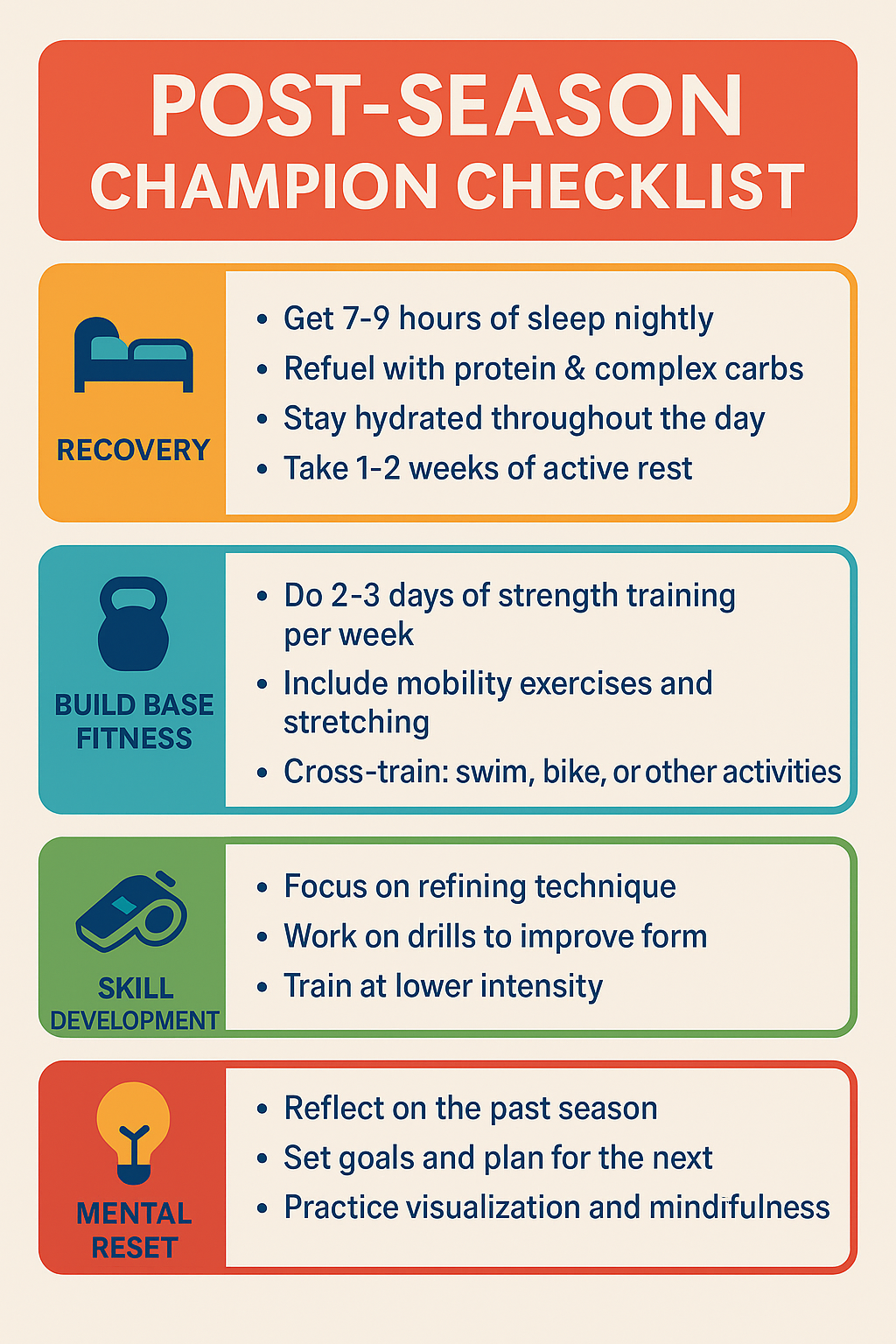
After months of intense training and racing, your body is fatigued. The post-season is the ideal time to focus on active recovery, which is crucial for long-term performance. Recovery allows your muscles to repair, your energy systems to replenish, and your mind to reset.
Physical Recovery
Sleep: Quality sleep is the foundation of recovery. Aim for 7–9 hours per night, with short naps if needed.
Nutrition: Refuel with whole foods, lean protein, complex carbs, and healthy fats to support muscle repair and reduce inflammation.
Hydration: Keep fluids and electrolytes consistent to maintain energy balance and aid muscle recovery.
Mental Recovery
The post-season allows for a mental reset, helping prevent burnout and reigniting motivation.
Reduce stressors, limit social media comparisons, and take time to celebrate achievements from the previous season.
By prioritizing recovery, you not only prevent injuries but also allow your body and mind to perform at their best when the next season begins.
2. Building a Strong Foundation with Strength and Mobility
The post-season is an opportunity to address weaknesses, build strength, and improve mobility—all without the pressure of competing.
Strength Training
Focus on core, legs, and upper body strength to enhance endurance, power, and stability.
Include exercises like squats, lunges, deadlifts, planks, and pull-ups.
Strength training reduces the risk of overuse injuries and improves biomechanics.
Mobility and Flexibility
Incorporate dynamic stretching, yoga, and mobility drills to improve joint range of motion.
Stretching tight muscles, especially hips, hamstrings, and shoulders, reduces risk of injury during high-volume training.
Cross-Training
Engage in low-impact activities like swimming, cycling, yoga, or Pilates.
Cross-training maintains cardiovascular fitness while reducing strain on joints and muscles.
By building a strong foundation during this time, athletes prepare their bodies for the demands of the competitive season, making them more resilient and efficient.
3. Skill Development and Technique Refinement
The post-season is the perfect time to focus on technique and skill development without the pressure of competition. Small adjustments in form can lead to big gains over the season.
Swimming
Work on stroke efficiency, breathing techniques, and smooth transitions.
Include drills that enhance technique rather than focusing on speed.
Running
Focus on cadence, running form, and uphill mechanics.
Strengthen weak points like glutes and hamstrings to improve efficiency and reduce injury risk.
Cycling
Improve pedal stroke, cadence, and power output through skill-focused drills.
Work on cornering, climbing, and bike handling skills if training outdoors.
Deliberate practice during the post-season compounds over time, leading to measurable performance improvements in the race season.
4. Mental Reset and Goal Setting
The mental aspect of training is just as important as physical conditioning. The post-season is a prime opportunity for reflection, planning, and mental development.
Reflect on the past season: Identify successes, setbacks, and areas for improvement.
Set SMART goals: Specific, measurable, achievable, relevant, and time-bound goals keep training structured and purposeful.
Mental conditioning: Incorporate visualization, mindfulness, and meditation to improve focus, reduce anxiety, and strengthen mental toughness.
Celebrate achievements: Recognizing personal milestones helps maintain motivation and confidence.
A well-prepared mindset ensures that when training ramps up again, you approach it with clarity, discipline, and renewed purpose.
5. Periodization and Planning for the Next Season
One of the most overlooked aspects of the post-season is strategic planning. Champions do not leave their next season to chance—they use this time to set up for success.
Analyze performance: Review past races and training logs to identify trends and weaknesses.
Plan structured training: Develop a periodized training plan with base, build, and peak phases, including recovery cycles.
Prevent overtraining: Build in rest weeks and monitor intensity to reduce injury risk.
By carefully planning the next season during the post-season, athletes ensure they start training with purpose, making progress more efficient and measurable.
6. Why Champions Focus on the Post-Season
This period separates elite athletes from the rest. While others may rest or lose motivation, champions use this period strategically to recover, improve, and prepare.
Benefits of an effective post-season:
Recovery: Physical and mental restoration sets the stage for peak performance.
Strength and Resilience: Strength training and mobility work reduce injury risk.
Skill and Technique: Refining efficiency in swimming, cycling, or running leads to measurable gains.
Mental Clarity: Goal setting, visualization, and reflection build mental toughness.
Structured Preparation: Periodized plans optimize training and reduce wasted effort.
Champions understand that consistent improvement happens when the season isn’t in full swing, making the post-season a critical component of success.
7. How to Structure a Productive Post-Season
A productive post-season balances recovery, skill work, and strength building:
Weeks 1–2: Active recovery, mental reset, and light cross-training.
Weeks 3–6: Base training with strength, mobility, and skill refinement.
Weeks 7–10: Gradually increase intensity with more structured workouts and technique-focused sessions.
Final 2 weeks: Pre-season preparation with short, high-quality sessions and race-specific drills.
Consistency, planning, and patience are key. Overloading the body too soon can lead to injuries or burnout.
Don’t view the post-season as downtime—it’s the secret weapon of champions. By prioritizing recovery, building strength, refining technique, and planning strategically, athletes enter the next season stronger, faster, and smarter.
The post-season is where you address weaknesses, improve mental toughness, and set yourself apart from the competition. Champions are not just made during races—they are built during the months when others take it easy. Use your post-season wisely, and your future self will thank you with improved performance, reduced injuries, and greater satisfaction in every race.
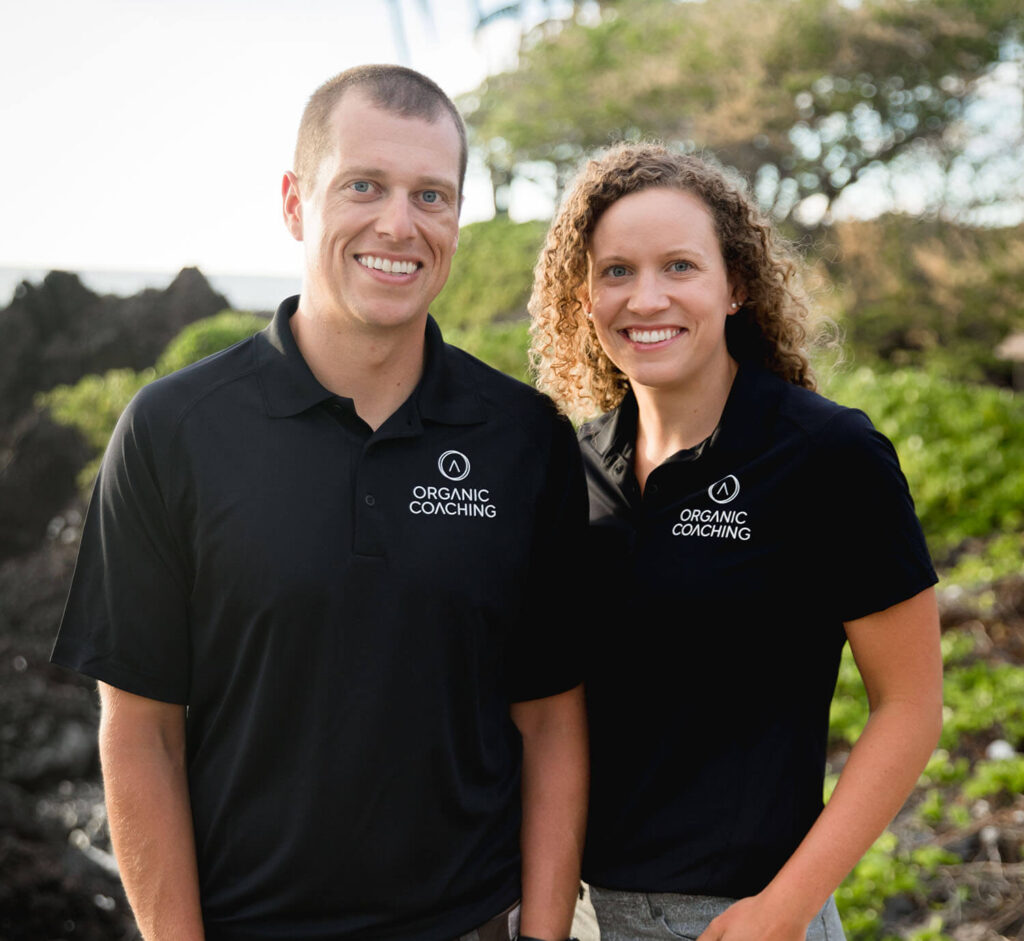
Carly and Tyler Guggemos built Organic Coaching in 2014 with a simple philosophy that works. The idea is to take what you have and grow it to get faster, fitter and stronger. And to do it with the time you have – not the time you wish you had.