

If you’re a triathlete trying to balance training with work, family, and real life, you don’t need more tactics.
You need clarity.
Most athletes aren’t failing because they lack discipline or motivation. They’re struggling because their training was never designed to fit a full life in the first place.
Smarter triathlon training isn’t about doing less to do less.
It’s about doing what matters most, consistently, without burning yourself out.
Here’s what smarter training actually looks like when life is full.
Smarter triathlon training starts with a realistic weekly structure.
Not a “perfect” week. A repeatable one.
For busy triathletes, this usually means:
Instead of trying to cram everything in, smarter training prioritizes:
This structure allows athletes to train consistently week after week, without needing ideal conditions.
Consistency beats perfection every time.
When training time is limited, volume stops being the primary driver of progress.
Quality becomes the differentiator.
Smarter training focuses on:
This doesn’t mean every workout is hard.
It means every workout has a reason.
A well-designed 60-minute session can be more effective than a poorly executed 2-hour one, especially when recovery resources are limited.
One of the biggest shifts in smarter triathlon training is recognizing that recovery is training.
Busy athletes don’t fail because they train too little.
They struggle because they recover too little.
Smarter training plans account for:
Recovery isn’t something you “earn” after hard work.
It’s something you protect, so hard work actually pays off.
When recovery improves, fitness follows.
One of the most overlooked aspects of training is communication.
Smarter training relies on:
Your coach doesn’t just prescribe workouts; they interpret context.
Life changes. Sleep fluctuates. Stress spikes.
Training should respond accordingly.
Communication turns data and workouts into usable insight.
Most busy triathletes are already motivated.
What they need isn’t hype, it’s accountability and perspective.
Accountability helps athletes:
Smarter training includes accountability that keeps athletes:
Even highly motivated athletes benefit from an outside voice saying:
“This is enough today.”
When life is full, training has to fit, not fight your reality.
Smarter training:
It removes the pressure to do everything and replaces it with confidence that you’re doing the right things.
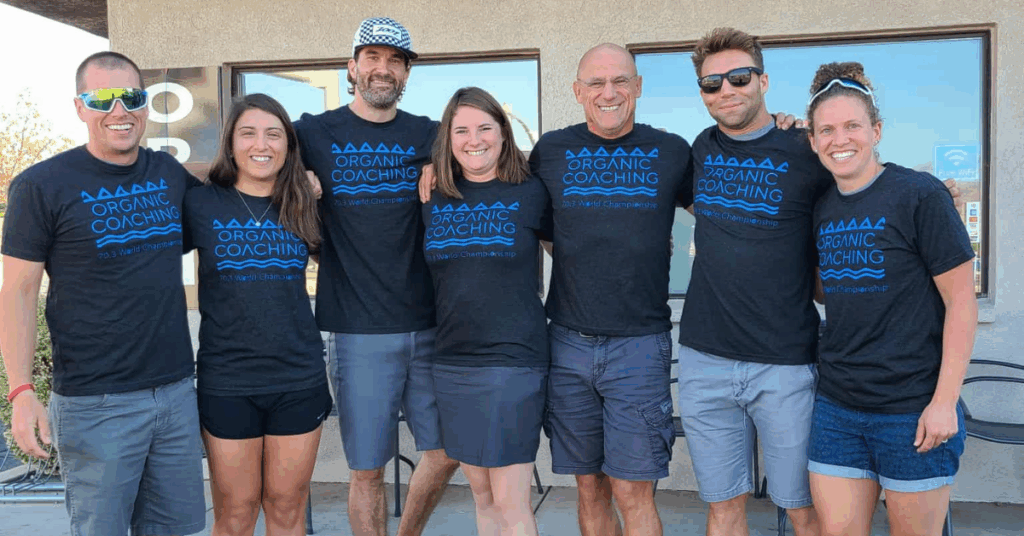
If you’re ready for training that adapts to your life, not the other way around, Organic Coaching is built for busy triathletes who want sustainable progress without burnout.