
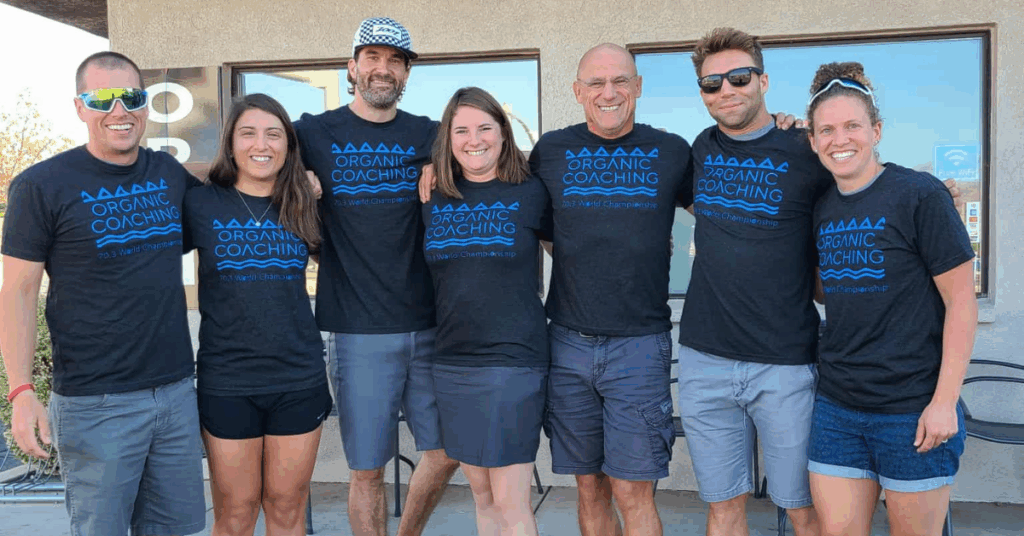
As triathletes, once the race season winds down, we’re often tempted either to completely crash (and that’s okay) or to jump straight into more of the same. But the smarter route is to embrace a post-season build phase, less about high volume or maxing out intensity, and more about recovery, smart preparation, and layering in long-term gains. This article—grounded in sport science—explains how to train smarter post-season, preserve your body, and set yourself up for next year’s success. If you’re looking for personalized support, our team at Organic Coaching is here to help you build that plan and stay consistent.
Once your last race is done, you enter the transition or “general preparation” phase of your annual training plan (sometimes referred to as the “off-season” or “post-season”). This period is critical for recovery, adaptation, and building the foundation for the next cycle of training. There is no one-size-fits-all off-season plan; success depends on your age, training history, current fitness level, and goals.
Research in triathlon also emphasises the value of a well-planned, periodised training system: cycling through phases of base, build, peak, and transition ensures that you don’t simply burn out or stagnate.
In other words, post-season isn’t a free-for-all. It’s a strategic phase, and if you train smarter here, you’ll be able to build for next year rather than simply recover.
One of the biggest mistakes is skipping recovery, or using the post-season as an excuse to “slack off” for too long or in the wrong way. It’s recommended that you take ~2 weeks off from structured training to allow both mind and body to reset.
What does meaningful recovery look like?
At Organic Coaching, we guide athletes through this smart reset phase so that when you return to training, you’re fresh, motivated, and ready to build!
Once you’ve had that initial downtime, you should take stock: what worked this season? What didn’t? What gaps need to be addressed?
Start by assessing two key factors: the demands of the athlete’s goal event and their current profile relative to those demands. This involves a gap analysis to identify areas needing improvement.
Key questions to ask yourself:
Once you’ve identified the gaps, set smart, measurable goals for next year (e.g., “reduce bike split by 10 minutes”, “run half-marathon at 1:45”, “swim 50 m per stroke less”). Then map your plan backwards from that goal.
In this post-season to early preparation phase, the focus shifts from pure volume or race-specific intensity to building durable fitness: aerobic base, movement quality, strength, and technique.
From training discussions: maintaining a long, slow ride or run is still valid, but intensity should be modulated, and strength/mobility must play a big role.
Smart training priorities:
At Organic Coaching, we emphasise “training smarter, not harder”. It’s better to have consistent moderate-quality sessions than sporadic monster sessions that lead to fatigue or injury.
As you move out of the base phase and closer to next season’s build, you slowly reintroduce higher intensity, race-specific sessions, and discipline-specific work. But avoid doing everything all at once. Avoid the common mistake of trying to do too much simultaneously. The off-season is not about easy sessions only, but neither is it about sustained high intensity.
Progression plan:
This gradual layering supports adaptation, minimizes injury risk, and aligns with the periodisation approach.
Training smarter means watching your load, both in terms of acute (recent workouts) and chronic (weeks to months) stress. The concept of “supercompensation” reminds us that the body needs adequate recovery + stimulus to adapt.
Tools & strategies:
Long-term athletic success isn’t just about one race; it’s about sustaining fitness, health, and enjoyment year after year. An article on “future-proofing triathlon” suggests that coaches and athletes must train smarter and build with the long view in mind.
Things to include:
At Organic Coaching, we specialise in helping time-crunched triathletes and endurance athletes train smarter, not just harder. Whether you’ve just finished your season and want a structured post-season build OR you’re looking ahead to next year’s A-race and want to connect the dots for success, we’ve got you. Our coaching approach focuses on individualized planning tailored to your life (yes, we know “time” is the biggest challenge), integrating strength and mobility, developing recovery strategies, and achieving measurable performance gains.
Ready to train smarter for the long haul? Let’s build your next chapter together!
Here’s to a smarter off-season and a successful build into your best year yet!